Glowist: A Handcrafted Serif Font with Storybook Charm
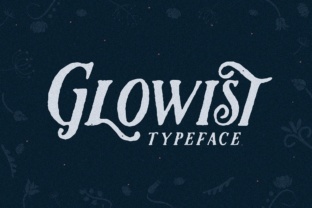
There is something quietly magnetic about a font that feels like it was drawn by hand, with all the small imperfections that make letterforms feel alive. Glowist is exactly that—a serif font created by hand, carrying an organic, textured quality reminiscent of the type you find in classic storybooks. It comes with a set of ornaments that extend what you can do with it, inviting you to build layouts that feel personal, warm, and distinct. Whether you are designing a children’s book cover, a brand logo, a wedding invitation, or a social media graphic, Glowist offers a starting point that already feels complete in its character.
What makes this font stand out is not just its visual style—it is the thoughtfulness behind its construction. The uneven edges, subtle ink bleeds, and gentle weight variations give it a tactile presence on screen and on paper. The included ornaments (floral motifs, borders, decorative elements) are not afterthoughts but companions to the letters. They open up possibilities for framing, embellishing, or simply adding breathing room to your work.
In a world where digital design can sometimes feel sterile, Glowist brings back the warmth of analog creation. Below we explore what this means for different kinds of users, what priorities might guide your choice, and how to decide if this font fits your next project.
The Character of Glowist: Texture and Intention
To understand why Glowist matters, it helps to look at what makes it different from a standard digital serif. Most serif fonts available today are vector-perfect—clean, crisp, mathematically precise. Glowist goes the other direction. Its letterforms show the marks of human hands: slight wobbles in curves, varied stroke widths, and soft edges that mimic ink on paper. This is not a flaw; it is the feature. The texture creates a sense of nostalgia and authenticity, as if the words were printed from an old letterpress.
The ornaments that come with the font add another layer. They are designed in the same hand-drawn style, so they feel like they belong with the letters. You might use a floral ornament as a divider between sections, a small border around a quote, or an accent mark next to a headline. They save you the trouble of sourcing separate decorative elements that clash in style.
For designers, this means less time matching aesthetics and more time focusing on composition. For non-designers, it means you can achieve a polished, cohesive look without needing advanced skills.
Who Benefits from Glowist—and How
Different people will value Glowist for different reasons. Below is a breakdown of how various audiences might approach it, what they would look for, and how the font serves their goals.
Beginner Designers and Hobbyists
If you are new to typography or design, Glowist offers a safe, beautiful starting point. Because the font already has so much personality, you do not need to overthink pairings or styling. Use it for a social media post, a personal blog header, or a simple flyer, and it will likely look intentional and warm.
- Ease of use: The ornaments are ready to drop in. No need to create decorative elements from scratch.
- Learning value: Working with a textured font teaches you about spacing, hierarchy, and how mood is set by type choice.
- Low risk: Since Glowist is versatile for small projects, beginners can experiment without worrying about professional standards.
Practical example: A hobbyist creating invitations for a friend’s baby shower can set the main text in Glowist and add a small floral ornament next to the date. The result looks custom without requiring hours of layout work.
Seasoned Designers and Creative Professionals
For experienced designers, Glowist is a tool that solves specific problems. It works well when you need a font that feels handmade but still reads clearly. It is particularly useful for packaging, book interiors, branding for wellness or boutique businesses, and editorial projects that call for a softer voice.
- Flexibility: The ornaments expand your compositional options. You can use them as standalone graphics, repeated patterns, or accent marks.
- Quality: The handcrafted nature means every character has nuance. Posters and prints benefit from this depth.
- Creativity: Because the font is not overly neutral, it pushes you to think about layout, color, and supporting imagery in a more thoughtful way.
Practical example: A graphic designer rebranding a small farm-to-table restaurant could use Glowist for the logo and menu headings. The organic feel matches the brand identity of natural, locally sourced food. Adding ornament flourishes on the menu sections reinforces the handcrafted theme.
Educators and Workshop Leaders
Teachers of typography, design, or even creative writing might find Glowist useful as a teaching tool. Its visible handmade qualities make it easier to discuss concepts like contrast, texture, and emotional resonance in type. Students can see immediately how a font changes the tone of a passage.
- Learning value: Compare Glowist with a clean digital serif in the same layout. Students grasp why texture matters.
- Presentation: Classroom materials, handouts, and slides become more engaging when using a typeface that feels warm and human.
- Reliability: For printed worksheets or posters, the font holds up well because it is designed for readability despite its texture.
Practical example: A college instructor teaching a module on typography can assign students to use Glowist for a one-page flyer about a local event. The constraint of working with a textured font forces students to think about hierarchy and spacing differently than they would with a neutral sans serif.
Small Business Owners and Freelancers
If you run a small business or work as a freelancer, your brand identity needs to convey trust and distinctiveness without breaking your budget. Glowist gives you a professional, emotive look at a fraction of the cost of hiring a custom lettering artist.
- Commercial value: You can use the font for logos, product labels, website headers, and promotional materials. The ornaments help you create a cohesive system.
- Speed: Because the font and ornaments work together, you can produce branded materials faster.
- Long-term usefulness: The style stays relevant—it does not follow a fleeting trend. It feels classic in the way that hand-lettered signs and book pages do.
Practical example: A freelance illustrator selling prints at craft fairs can create price tags, business cards, and a small banner using Glowist. The consistent hand-drawn look ties all the pieces together and reinforces the handmade quality of the artwork itself.
Bloggers, Publishers, and Content Creators
For anyone who publishes text online or in print, readability and personality need to coexist. Glowist works beautifully for headings, pull quotes, drop caps, and short passages. For long body text, it is best reserved for shorter pieces or paired with a simpler companion font.
- Presentation: A blog post with a Glowist header followed by a clean sans-serif body reads as both elegant and approachable.
- Creativity: Use the ornaments to separate sections, mark chapter breaks, or highlight key points. They add visual rhythm.
- Speed: One font license covers both text and decoration, so you spend less time searching for supplementary graphics.
Practical example: A travel blogger writing a post about a remote village can set the title in Glowist and use a small leaf ornament between paragraphs. The font reinforces the rustic, off-the-beaten-path feel of the story.
How to Decide If Glowist Matches Your Project
Not every project needs a textured, handcrafted serif. Here is a simple way to check if Glowist is the right choice for you.
Consider your message. If you are aiming for a tone that is warm, nostalgic, intimate, or artisanal, Glowist supports that. If your message is strictly professional, technical, or minimalist, a cleaner font might serve better.
Consider your medium. Glowist shines in mid-sized applications: headings, short blocks of text, logos, and decorative elements. For very small text sizes (below 10 points), the texture might reduce readability on screen. Test it first. For large display sizes, the hand-drawn details become assets.
Consider your skill level. Beginners will appreciate that the font does a lot of the aesthetic work on its own. Professionals will love how it pushes them to make intentional layout choices.
Consider your timeline. If you need a quick, cohesive visual system, the included ornaments save hours of additional sourcing and matching. If you prefer to create every element from scratch, you might feel constrained by having ready-made decorations.
What to Look for When Trying Glowist
When you first explore Glowist, pay attention to a few details:
- Spacing. Because the letters have irregular edges, check how they sit next to each other in different word combinations. The font is spaced well, but is always worth testing your own content.
- Ornament usage. Try using ornaments as bullet points, section dividers, or framing devices. See how they scale and whether they maintain clarity.
- Readability at size. Set a short paragraph at 14–18 points. Can you read it comfortably? The answer tells you whether it works for your specific use case.
- Pairing potential. Try Glowist with a clean sans-serif or a simple script. It pairs well with unobtrusive companions that let the handcrafted details stand out.
No single font works for every scenario, but Glowist covers a wide range because it balances personality with function. It is not a novelty font that you use once and forget; it is a tool you can return to for projects that need a human touch.
Long-Term Value: Why Glowist Earns Its Place in Your Collection
Over time, a font like Glowist becomes reliable. Whether you are a designer building a portfolio, a small business owner refreshing your brand, or a hobbyist making gifts for friends, you will reach for it when you want something that feels made, not manufactured.
The ornaments add longevity. Trends come and go, but decorative floral and border motifs have been used in book design for centuries. They will not look dated quickly. And because they match the font exactly, you can create layouts that feel complete without excessive decoration.
For those who teach, Glowist provides a case study in how texture, tradition, and emotion inform typography. For those who create, it offers a style that stands out in a sea of uniform digital typefaces.
If you are looking for a font that invites you to slow down, to notice the letters, and to care about how they sit on the page, Glowist is worth your attention. It does not try to be everything; it aims to be itself—warm, handmade, and full of character. That is a rare and valuable quality in any creative work.